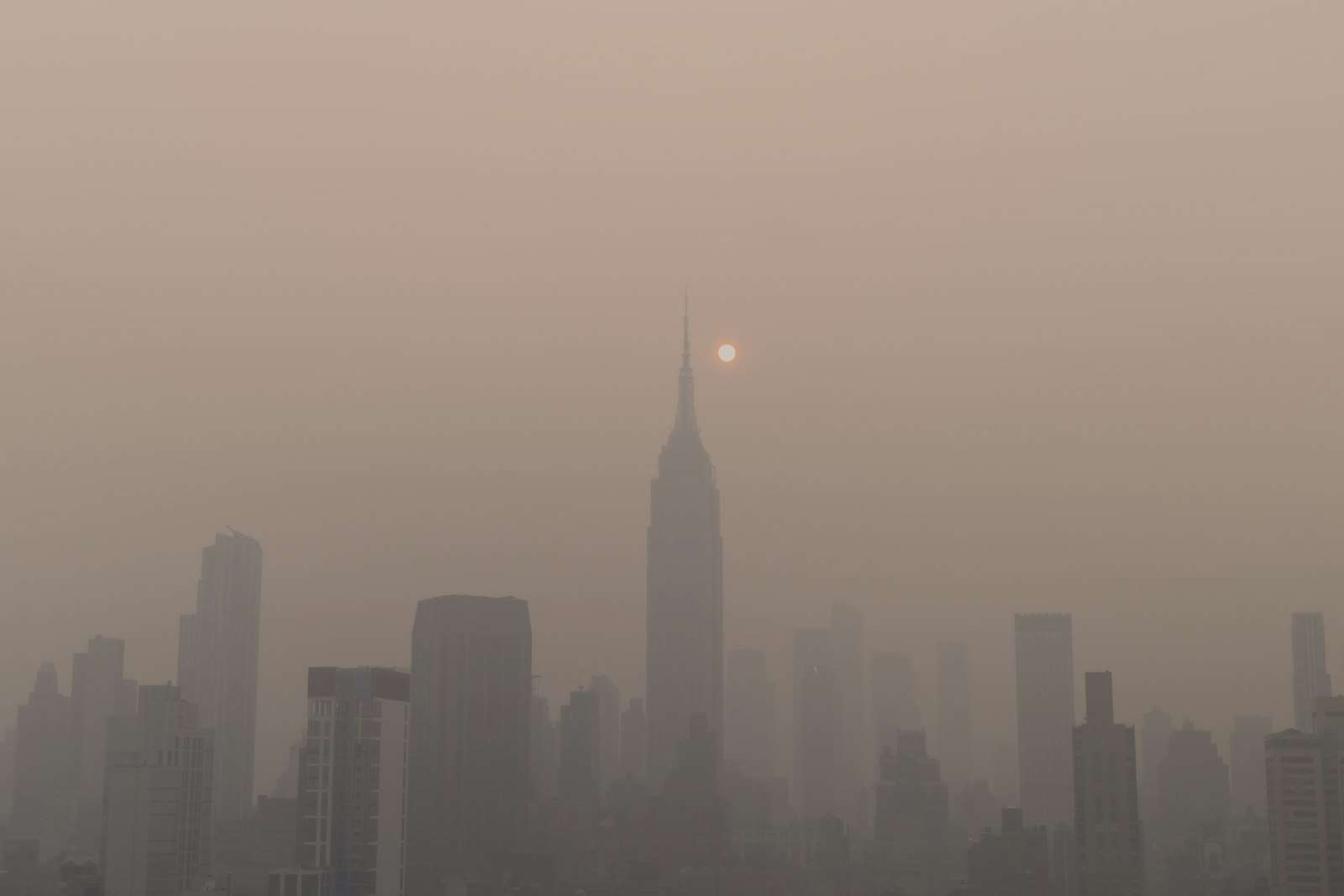
Clark County issued its second wildfire smoke advisory in under three weeks on September 16, 2026, after smoke from fires near Ensenada, Mexico drifted north over the Las Vegas Valley. Three weeks earlier, smoke from California wildfires had triggered the same kind of advisory. For homeowners and property managers who have now watched this play out more than once this year, the practical question is not whether the smoke is real. It is whether it actually gets into the house, and whether there is any way to know that for certain rather than just waiting for the advisory to lift.
Running an air purifier during a smoke advisory is a reasonable response and it does help. What it does not do is tell you whether smoke particles made it indoors, how much got in, or whether they are still there after the advisory ends. That is what indoor air quality testing measures directly, with results specific enough to serve as documentation if a smoke-damage dispute, a lease disagreement, or an insurance question comes up later.
Why Las Vegas Keeps Getting Wildfire Smoke Advisories
Southern Nevada does not need a local fire to get a smoke advisory. Clark County sits downwind of two active wildfire regions: California to the west and, as the September 2026 advisory showed, northern Mexico to the south. When either region has an active fire season, prevailing wind patterns can carry smoke and fine particulate matter into the valley within a day or two, even though the fire itself may be hundreds of miles away.
That is a different situation from a single bad air day. It means Las Vegas homes and businesses can expect smoke advisories to recur across a season, tied to fire activity the region has no control over. Current conditions can be checked directly through AirNow’s Nevada air quality page. A single advisory is a nuisance. A pattern of them, repeating every few weeks through summer and into fall, is a reason to think about how a home actually holds up against it rather than treating each one as an isolated event.
What Actually Happens to Smoke Once It Gets Indoors
Wildfire smoke is mostly fine particulate matter, referred to as PM2.5, small enough to pass through the same gaps that let in normal household dust: door seals, window frames, and HVAC intakes that lack high-efficiency filtration. According to the EPA’s guidance on wildfires and indoor air quality, homes without upgraded filtration can see indoor PM2.5 levels climb to a meaningful fraction of the outdoor reading within hours of an advisory starting, even with windows and doors kept shut.
Newer, tightly built homes fare somewhat better than older construction, but “somewhat better” is not the same as sealed. A home built in the 2000s with a standard HVAC filter still exchanges indoor and outdoor air constantly through the return system. The advisory ending outside does not mean the particulate matter that already settled indoors, on surfaces, in carpet, and in HVAC ductwork, is gone with it.
Air Purifier or Air Quality Testing? What Each One Actually Tells You
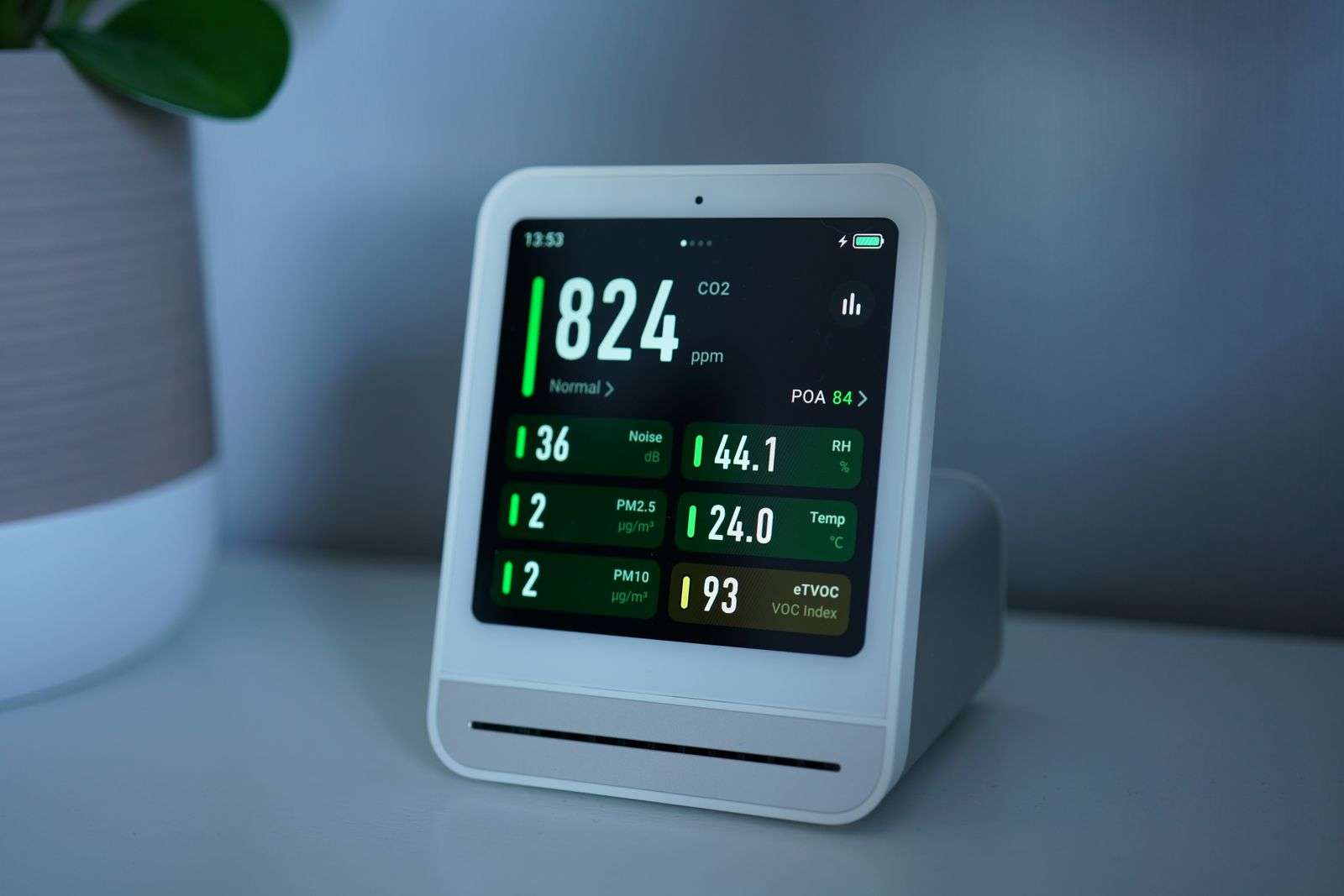
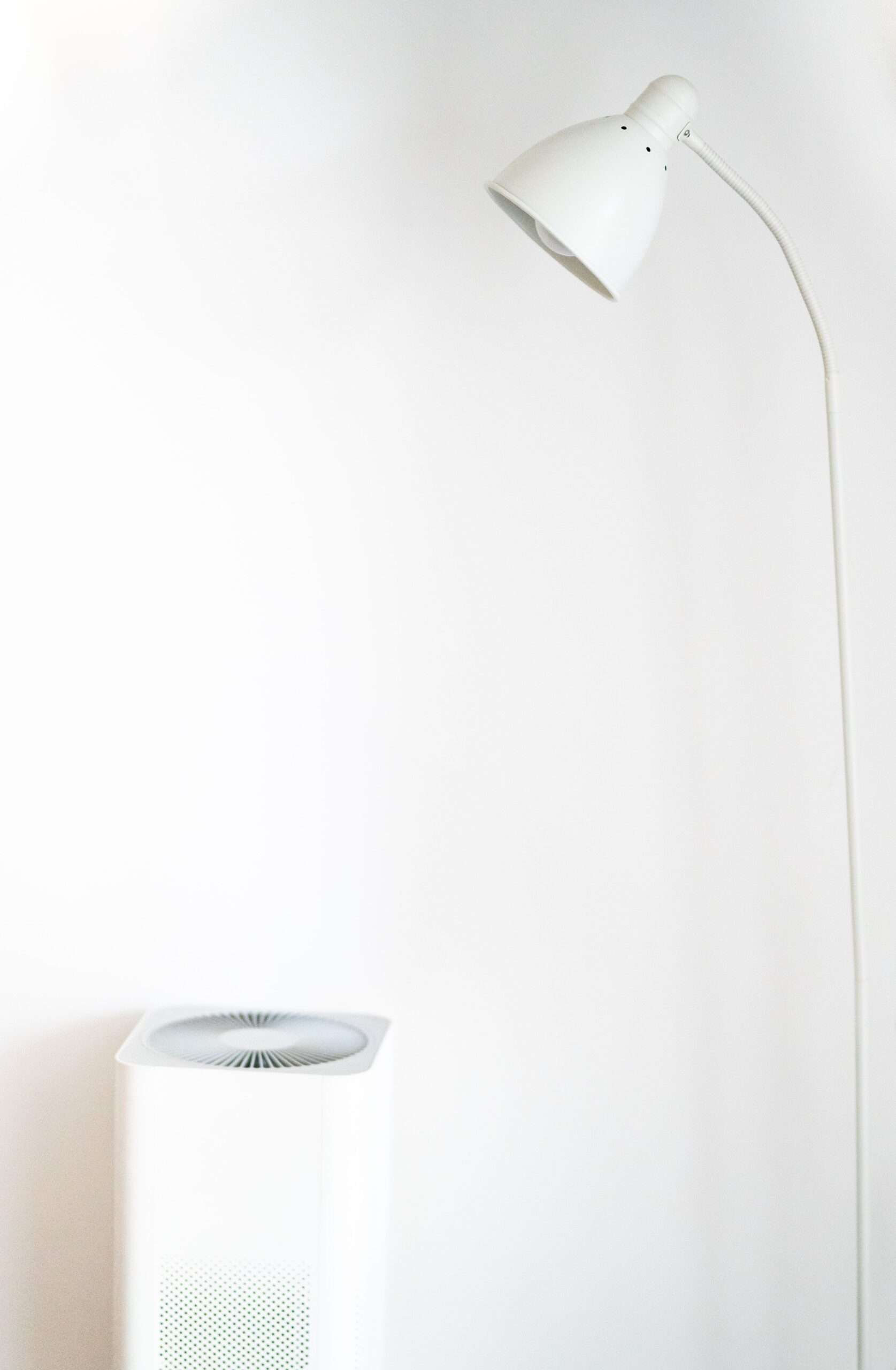
These solve different problems, and conflating them is the most common mistake homeowners make during a smoke event. A purifier reduces particulate matter going forward. It does not measure what is already in the air, confirm whether a specific room or HVAC zone is affected, or produce a result anyone outside the household can verify.
| Question | Consumer air purifier / monitor | Professional indoor air quality testing |
|---|---|---|
| What it does | Filters air continuously; some models display a live sensor reading | Collects air or surface samples and sends them to an accredited lab for analysis |
| Accuracy | Consumer-grade sensors, uncalibrated, useful for trends rather than exact figures | Calibrated equipment and lab methods with documented results |
| What it’s good for | Day-to-day awareness and reducing ongoing exposure | Confirming whether smoke residue is actually present, and at what level, in a specific space |
| What it can’t do | Serve as evidence in an insurance, lease, or sale dispute | Run continuously; it is a point-in-time measurement, not ongoing filtration |
A purifier and a monitor answer “is the air probably better now.” Professional testing answers “how much particulate matter is actually here, and is that a level worth acting on.” Most households only need the first answer. Some situations call for the second, and that distinction is where a lot of money gets spent on the wrong tool.
When Professional Testing Is Actually Worth Calling For
Most homes that sealed up during a two- or three-day advisory and had no lingering odor or symptoms afterward do not need professional testing. Running the HVAC fan for a few hours on fresh outdoor air once the advisory lifts, combined with a portable purifier during the event itself, covers that case adequately for most people. Paying for a lab-based test on every advisory would be overkill for a single household with no specific concern.
Testing becomes genuinely worth calling for in a narrower set of situations: a lingering smoke odor or symptoms that persist days after outdoor air quality has returned to normal; a home changing hands during or right after a smoke season, where a buyer or seller wants documented conditions rather than a verbal assurance; an insurance claim or landlord-tenant dispute where “the smoke got into the unit” needs to be something other than an opinion; and multi-unit property managers who need consistent, comparable documentation across several units rather than relying on individual tenants’ impressions. Outside those cases, the money is usually better spent on filtration than on testing.
What a Professional Indoor Air Quality Test Actually Involves
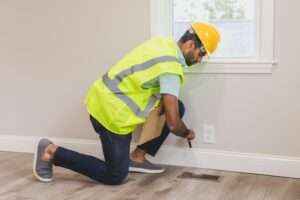
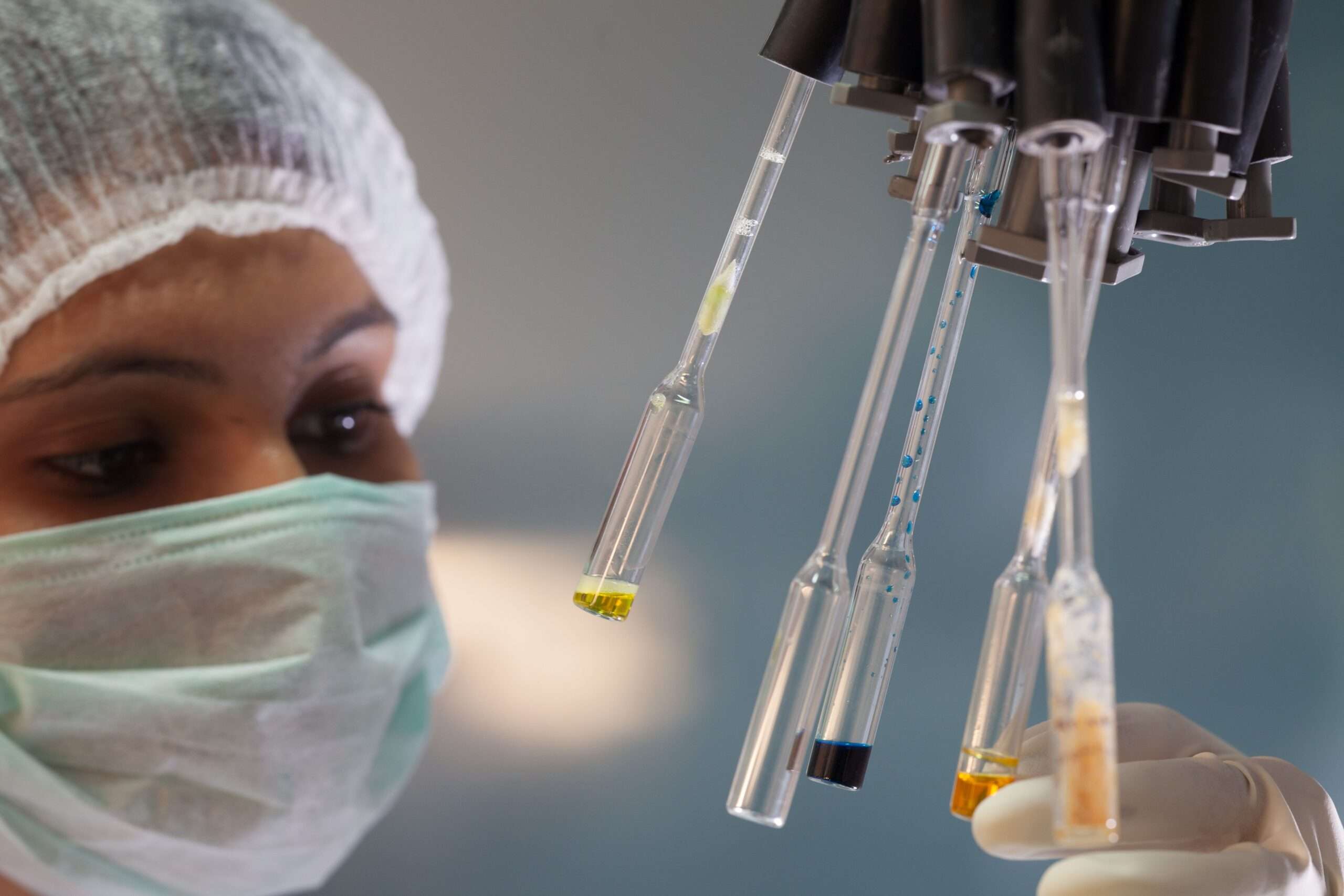
An independent testing visit starts with a walkthrough to identify likely problem areas, typically HVAC returns, rooms with the most exterior gaps, and any space where occupants reported odor or irritation. Air and surface samples are collected using standard sampling methods, then sent to a laboratory rather than read off a handheld sensor on-site. The lab results come back as a written report showing measured particulate and, where relevant, other combustion byproduct levels for each sampled location.
This is also where it matters that the company doing the test has no stake in what the results say. A firm that also sells remediation work, duct cleaning, or air purifiers has a financial reason to find a problem. An independent testing and consulting firm that performs no remediation, repair, or corrective work has no such incentive either way. That distinction is worth checking before hiring anyone for this kind of work, regardless of which company does it.
Common Mistakes During a Smoke Advisory
- Leaving the HVAC system on “auto” without checking the filter. A standard filter does little against PM2.5, and a system pulling outdoor air on a normal cycle can bring smoke in faster than it would leak in passively.
- Judging air quality by smell alone. Fine particulate matter is often noticeable well before or after it can be smelled, and the reverse is also true: a faint smoke smell does not always mean a meaningful particulate level.
- Treating a consumer monitor reading as a lab result. It is a useful trend indicator, not a number that will hold up if a dispute over smoke damage ever needs documentation.
- Waiting until smoke is visibly indoors to seal the home. Closing windows, doors, and any HVAC fresh-air intake before an advisory takes effect works better than reacting once conditions are already bad.
- Ignoring the cumulative effect of repeated advisories. A home that has been through three or four smoke events in a season has had more opportunity to accumulate particulate matter in carpet, ductwork, and soft furnishings than one that dealt with a single event.
Frequently Asked Questions
Do I need to test my home’s air quality after a wildfire smoke advisory ends?
Not automatically. If the home was sealed during the advisory, the HVAC filter is reasonably current, and no odor or symptoms lingered afterward, testing usually is not necessary. It becomes worth considering if symptoms or odor persist, or if you need documented proof of conditions for a sale, lease, or insurance matter.
How is professional indoor air quality testing different from a consumer air quality monitor?
A consumer monitor gives a real-time, uncalibrated sensor reading useful for spotting trends. Professional testing collects samples that are analyzed in a laboratory using calibrated methods, producing a documented result that can be referenced later, including in a dispute.
Is it safe to run my HVAC system during a smoke advisory?
It depends on the filter and intake setup. A system pulling in outdoor air through a standard filter can bring smoke indoors faster than passive leakage would. Switching to recirculate mode, or using a higher-efficiency filter rated for fine particulate, reduces that risk.
Can indoor air quality test results be used for an insurance or lease dispute?
Lab-based results from an independent testing firm carry more weight than a verbal description or a consumer monitor reading because they are documented and traceable to a specific sampling method and date. Whether a specific insurer or landlord accepts them depends on the individual policy or lease, which a testing firm cannot guarantee.
How long does smoke residue stay in a home’s air after an advisory lifts?
There is no fixed number that applies to every home. It depends on how long the advisory lasted, how well the home was sealed during it, and whether the HVAC system was run on fresh air or recirculate mode. Persistent odor beyond a few days after outdoor conditions return to normal is a reasonable signal that something is still settled indoors.
Southern Nevada’s wildfire smoke advisories are shaping up as a recurring part of the summer and early fall, not an isolated event tied to one bad fire season. A purifier and a sealed home cover most single advisories adequately. Whether a home’s air actually needs to be measured comes down to what happened during and after that specific event, not a rule that applies the same way to every house in the valley.
This article was researched and drafted with AI assistance as part of an automated content workflow for Noble Environmental and Consulting, using public sources including the EPA, Clark County Department of Environment and Sustainability, and local news coverage of the 2026 advisories cited above. It was published without a prior human editorial review. If anything here does not match your experience with a Southern Nevada property, you can reach Noble Environmental and Consulting through the Contact Us page.